By: David Broder July 17, 2026
Chinese Sodium Ion Battery Continues to Surprise Scientists
Sodium Ion batteries might quickly become a major player in the battery market.
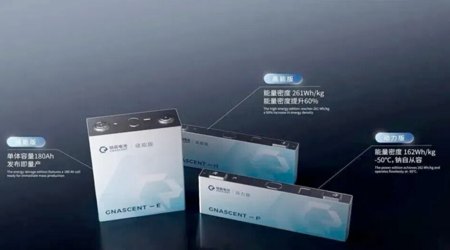
On May 17, 2026, Volkswagen-backed Gotion launched its dedicated sodium-ion battery brand; Gnascent, they presented three sodium-ion batteries for different uses:
one for electric cars and drones, one for commercial vehicles, and one for energy storage. Mass production is set to begin in the fourth quarter of this year. Two GWh-scale plants — production lines are already in operation in Tangshan and Hefei, China.
Longer-lasting storage batteries can help neighborhoods and cities better withstand blackouts, extreme weather, and periods of peak electricity demand. 88% — Reported capacity retention of the Energy Storage variant at cold temperatures down to –40°C. Cold-weather reliability is another major factor, especially for bus fleets, delivery vehicles, and drivers in regions seeking EVs that perform consistently in winter. For households, a tougher, longer-lived home battery could make solar setups more practical over time by extending the value of every installed system.
—What Gotion’s Gnascent Platform Delivers—
- 261 Wh/kg — cell energy density of the Gnascent High-Energy variant, the company reports as approximately 60% above traditional sodium-ion cells
- 162 Wh/kg — energy density of the Power variant, capable of discharge down to –50°C
- 180 Ah — single-cell capacity of the Energy Storage variant, with a claimed cycle life exceeding 20,000 charge-discharge cycles
- 88% — reported capacity retention of the Energy Storage variant at cold temperatures –40°C
- 400°C — continuous heating temperature the Energy Storage variant withstands without ignition; passed 8 mm steel nail penetration test without fire
- 400°C — continuous heating temperature the Energy Storage variant withstands without ignition; passed 8 mm steel nail penetration test without fire
- 90+ — patents underpinning the Gnascent technology platform
- Q4 2026 — targeted date for large-scale mass production of the Energy Storage variant
- 400 GWh — Gotion’s total reported energy storage capacity across 20 global manufacturing bases as of end-2025
- 4.05 GWh — Gotion’s installed power battery capacity in China in April 2026; 6.6% market share in China, ranking 3rd behind CATL and BYD
Why Sodium Might Change The Game
If sodium-ion batteries can be produced at scale with this level of performance, they could significantly affect everyday costs. Sodium is generally more abundant and less geopolitically fraught than materials such as lithium, nickel, and cobalt, meaning a cheaper battery chemistry could translate into more affordable electric cars. Key limitations have kept people from committing to lithium battery technology: narrow temperature tolerance, flammability, and limited cycle life. Lithium is also more hazardous to dispose of and recycle than sodium ion. Potentially, making it a safer life-cycle and cleaner technology.Sodium Ion Matched Lithium Performance
Gotion has introduced their most powerful sodium-ion battery with an energy density of 261 watt-hours per kilogram, which is compareable to lithium iron phosphate batteries and roughly comparable to that of Tesla's 4680 cells. One notable feature was the battery's tabless, double-aluminum current collector design. This configuration helps reduce electrical resistance and promotes more even temperature distribution throughout the cell. The researchers noted that this design closely resembles the architecture currently used in Tesla batteries.